
4.9

Average rating from 120+ participants
.png)
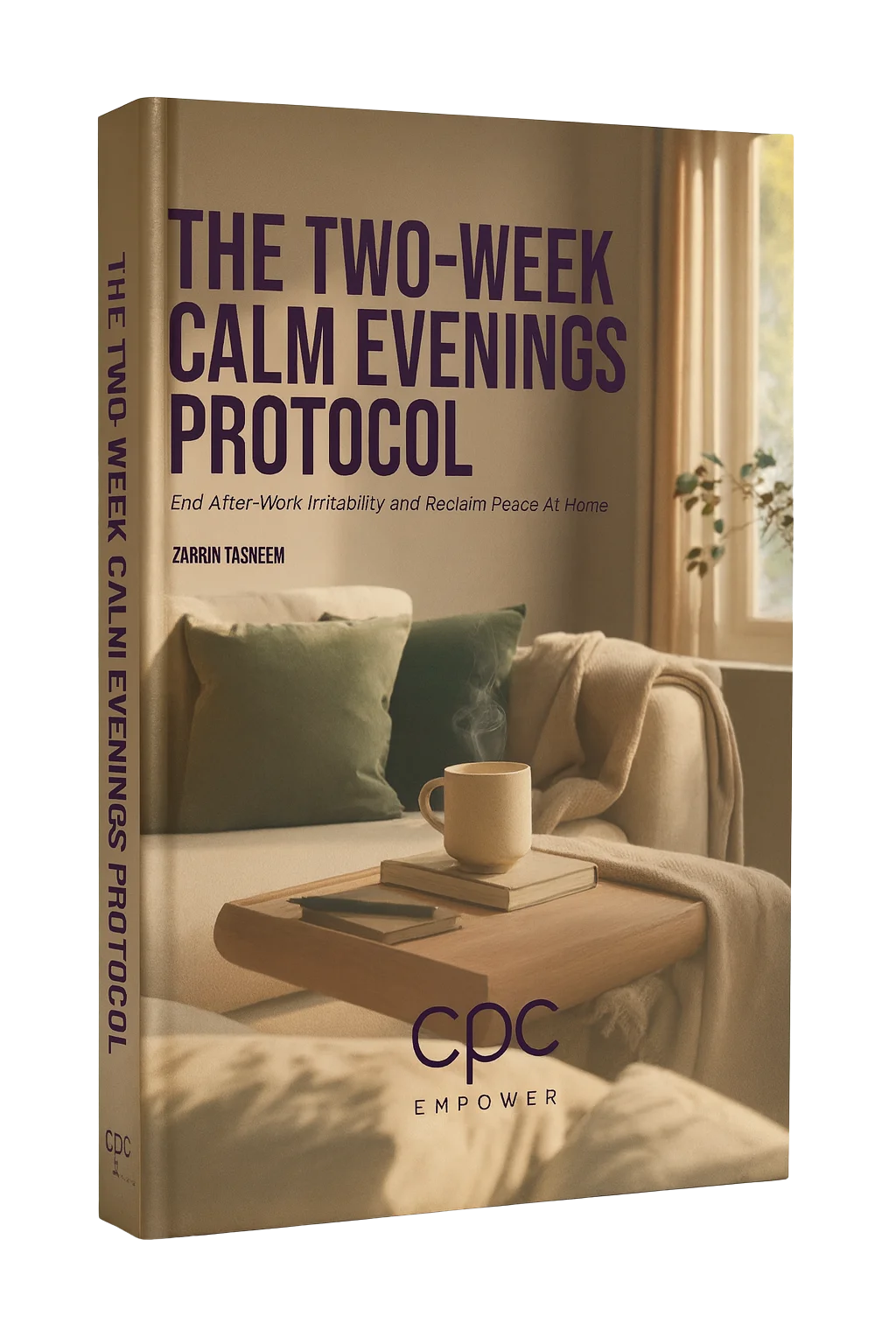

Busy professionals and parents who feel edgy after work and want a practical plan to make evenings calm within two weeks. It works whether you live solo, with a partner, or with kids.
No. Everything runs with simple cues, breathwork, and lightweight checklists. The optional tracker works in Notion or Google Sheets, but you can also use paper.
Expect small wins by day 3 and a clearly calmer rhythm by day 14 when you follow the nightly steps. The tracker helps you spot and reinforce progress quickly.
Most nights require 10–25 minutes of structured actions woven into what you already do: a 5–15 minute shutdown, a 5–10 minute commute or ‘symbolic commute,’ and a short evening reset (7–30 minutes, adjustable).
You’ll get the eBook in PDF and EPUB, plus two bonuses: a printable shutdown checklist (PDF) and a Mood Tracker template for Notion and Google Sheets. Access is instant after purchase.
Yes. The protocol includes a ‘symbolic commute’ for remote days and compact 3–7 minute versions of each routine for late arrivals or unpredictable schedules.
.svg)
.svg)
The daily lessons helped us slow down and communicate with more care. Instead of reacting quickly during disagreements, we started noticing our patterns and using simple tools to repair the conversation. It made our relationship feel calmer, safer, and more connected.

I appreciated how realistic the program felt. The exercises were short enough to fit into a busy week, but still meaningful. Each step gave us something practical to reflect on, especially during stressful moments when communication usually became difficult.

The biggest change was learning how to pause before responding. The program helped me understand my emotions more clearly and speak without becoming defensive. Our difficult conversations still happen, but they feel more respectful and easier to repair now.

This course helped me recognize what I was feeling before it turned into frustration or distance. The reflection prompts made emotional awareness feel simple and practical. I started understanding my needs better and communicating them in a calmer way.

We liked that the program gave us real tools instead of vague relationship advice. The exercises helped us talk about boundaries, trust, and emotional safety with more clarity. It felt supportive, practical, and easy to return to throughout the week.

The repair exercises were the most helpful part for us. We learned how to come back to a conversation without blaming or shutting down. It gave us a simple way to reconnect after hard moments and move forward with more understanding.

Emily Carter

The program helped me understand why I sometimes pull away or ask for reassurance. It did not feel judgmental or overwhelming. Instead, it helped me notice the pattern and choose a better response with more patience and self-awareness.

The lessons were simple, but they made us think deeply about how we communicate. We started using better language around needs, expectations, and trust. By the end, we felt more prepared to handle daily stress as a team.
What I liked most was how easy the tools were to use in everyday life. We used them after work, during stressful evenings, and before difficult conversations. The small daily practices helped us build more connection over time.